Editor’s Note to Issue 20

Issues

Issue 20 of Notes (on worship and sacrifice) follows on closely from issue 19 (on simulation and brutality). The ‘worship’ component of the theme is most strongly represented in ‘Orbit’ by Savannah Adeniyan, a playful piece of prose which incorporates images of worship and idolation in its vivid descriptions of a performer and her fan.

Whilst issue 19 features several deaths, the current issue features several funerals: in ‘The Anna Principle’ by Mathilde Sergent, the formal grief of the funeral setting is contrasted with the frivolous lives of the characters – producing some uncomfortable dialogue in the process. ‘The Ledge’ by Isobel Pytka references two quite different kinds of death; the mercy killing and the drunken accident. These events are placed in a context of mundane details which make the deaths seem almost trivial.

As well as the thematic link, the two issues are connected directly though Sarah Caulfield’s two-part serialised story ‘Not a Victory March’. Sarah continues the narratives of her characters from the three defining wars of the last century, and ends each narrative on a tone of vague hope, which is symbolised by artwork connected in some way to the conflicts.

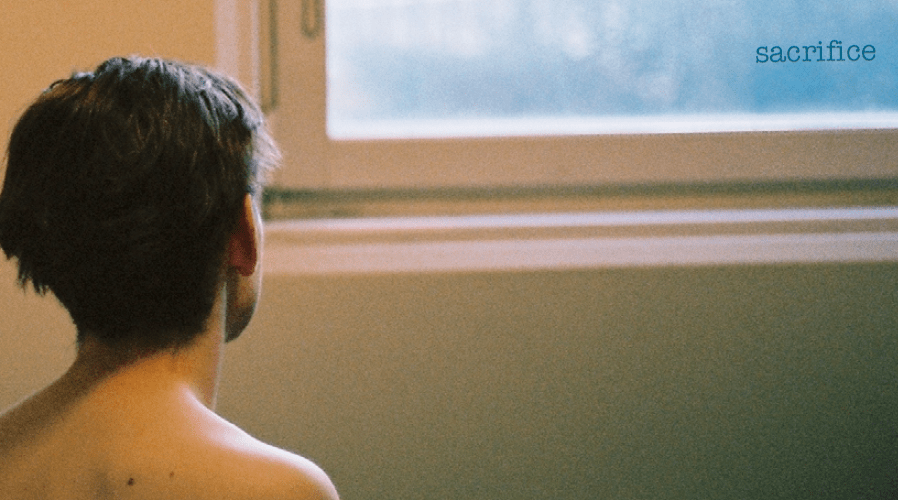
This is also the first issue of Notes to be published with full colour on the cover: Arthur Thompson’s photograph draws you in with the cold blues framed by the window in a room full of warm colours. This contrast, the disjointed angles of the window and radiator, the sloping shoulders against the sharp lines of the room, make the photograph much more compelling that the its subject matter alone.

Despite the heavy topics that the theme alludes to, Notes 20 is a varied read with more light than dark in its pages. We’d like to thank all of this week’s contributors and hope that the work in this issue will inspire future contributions.


The Notes Team


(cover art by Arthur Thompson)
(cover art by Arthur Thompson)

Editor’s Note

Issues

In the 19th issue of Notes, Grace Carroll considers the development of an American War doctrine, from the War of Independence to the Cold War. Her essay sets the precedent for an issue loosely themed on brutality and simulation. The first part of Sarah Caulfield’s ‘Not a Victory March’ considers the subjects of war and art’s ability to express human brutality. We follow sixteen year old Oscar during the first world war; see Jonathan and Andrion attempting to restore missing art works after the second world war; we follow Rachel, a journalist and photographer during the Vietnam war.

Paul Nash, quoted in Caulfield’s short story, discusses the war-writer’s most difficult task.

‘It is unspeakable, godless, hopeless, I am no longer an artist interested and curious, I am a messenger who will bring back word from the men who are fighting to those who want the war to go on forever. Feeble, inarticulate will be my message, but it will have a bitter truth’.

Arthur Thompson’s short text ‘It Was Merry for Elza’, takes a darkly comic stance and considers the audience’s ambiguous position in face of pain. Oscar Farley’s ‘Motorway’ is a fascinating and fast-paced look into simulation and television’s overlap with human brutality. Adam Napier’s prose poem ‘Fag’ deserves special mention, as it explores the strictly simulative component of the theme. Katie Fox’s illustration of a late nineteenth century nursery rhyme does the same.

Notes 19 encourages discussion concerning art’s ability to mediate or simulate brutality. However, it contains a wide range of poetry and prose and readers will find contributions that aren’t as dark as the theme suggests. We hope that the issue proves an inspiring read, and would like to thank all those who submitted.

Best wishes,

The Notes Team

Editor’s Note

Issues

Dear Readers,

The eighteenth issue of Notes, the last of this academic year, is loosely themed around inheritance. Gavin Stevenson’s essay explores the way in which we create narratives of human subjectivity within technology and points out how this affects how we see reproduction. Stevenson points out how we write narratives of visible genetic inheritance even when talking about children born using egg donation. The essay ‘Married Love’ discusses marriage as a construct designed to control the process of reproduction as well as inheritance of land and physical object; a construct that much later than one might think had a love-narrative imposed upon it. In Rob Oldham’s poem ‘Operation Overlord’ and Kat Addis’ ‘A Mother’s Legacy’ we see a less tangible notion of inheritance explored. Inheritance is explored as something received by the young, with sacrifice embedded in it. For the speaker in ‘Operation Overlord’, this sacrifice, and the violence that comes with it, is entrenched in everything that comes after. Both these poems deal with the nature of generational relationships, and the problematic negative presence of sacrifice and violence. In Oldham’s poem, the narrative of sacrifice corrupts benign actions like opening tubs of ice cream in the summer, but also encroaches upon the narrative of sacrifice itself. Finally, in Oldham’s imagination, burning soldiers leap from the fire, ‘rubbing their eyes like sleepy children’.

The final issue of Notes this year encourages discussion about the nature of generational relationships and about the narratives of inheritance and sacrifice we impose upon them. It is not, however, restricted to this, and we hope that this issue provides inspiration for future works and future discussion.

We would like to express our gratitude to Notes’ contributors and readers over this academic year. We hope you have a good break, and we will see you next year.

Best wishes,

The Notes Team

Image

Editor’s Notes: On Possession and Consumption

Issues

Dear Readers,

The seventeenth issue of Notes, out now, is loosely themed around possession and consumption. Many forms of possession are featured, beginning with Arthur Hirsch’s haunting tale of metaphysical possession. This neatly contrasts with Domhnall McDonald’s depiction of a traditional Scottish community – his short story explores a more politically tangible possessiveness. Possession and possessiveness are primal instincts which manifest themselves in a myriad of subverted ways in our highly ordered lives – which we hope is reflected in the range of pieces in this issue.

The centrefold is a set of drawings collected by Lizzie Perkins, who asked strangers and acquaintances to each draw a cup of tea. These simple images are telling of our desire to possess and consume: the drawings are strangely appealing and filled with symbols of warmth and homeliness. Sarah Sheard in Noli Me Tangere explores a more troubled relationship with drink and Greg Forrest loosely extends the discussion to food in ‘Fruit Bowl’.

We hope this issue provides inspiration for further works and future issues. As the penultimate issue of the academic year, this is the last opportunity to see the cycle of inspiration and creation which occurs between issues. We look forward to hearing your thoughts, and hope that we will see those of you in Cambridge at the Notes exhibition, featuring the work of Ayesha Singh (page 30) and many past contributors.

Image